Bond Yields Above 5% Deepen Fed and Growth Fears
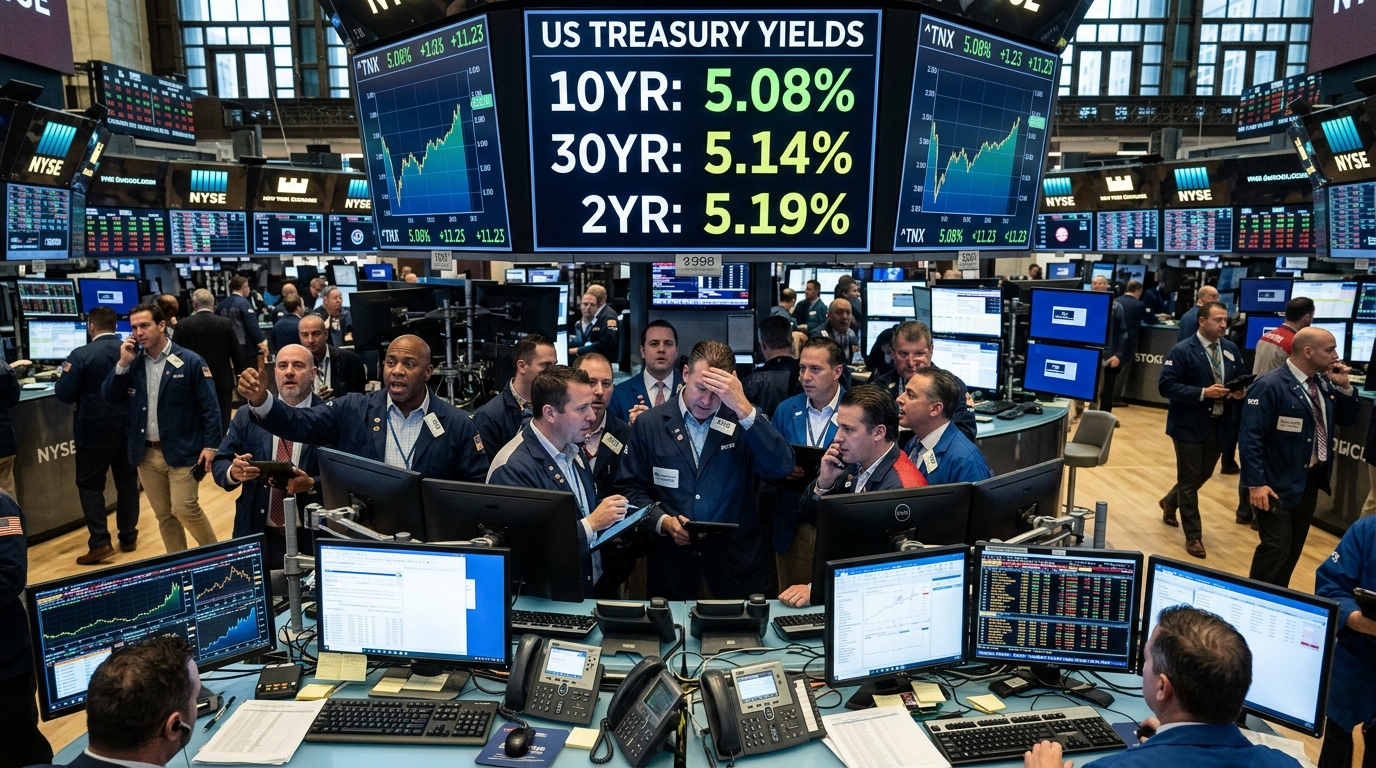
U.S. markets are again being forced to reckon with a sharp rise in bond yields, with Treasury rates moving above 5% and prompting a fresh debate over how much tighter financial conditions can become before economic growth starts to slow more meaningfully.
According to CNBC, traders increasingly see the possibility of another Federal Reserve rate hike in October after a hotter inflation reading and comments from Fed Vice Chair for Supervision Michael Barr. MarketWatch separately reported that bond yields surged above 5% as investors feared more Fed tightening, reinforcing the broader repricing now underway across fixed income and equities.
Why yields are moving so sharply
The immediate driver is a reassessment of the inflation outlook and the likely path of monetary policy. When inflation data run hotter than expected, investors tend to push up yields to reflect the chance that the Fed will keep rates higher for longer or raise them further.
That process matters because Treasury yields serve as a benchmark for borrowing costs throughout the economy. Higher government bond yields typically feed through to mortgages, corporate debt and consumer credit, tightening financial conditions even before the central bank formally changes policy.
CNBC framed the move as part of a broader economic adjustment that occurs when Treasury yields surge: borrowing becomes more expensive, pressure builds on interest-rate-sensitive sectors, and asset valuations can come under strain. MarketWatch tied the latest jump directly to concerns that Wall Street may have underestimated the persistence of inflation and the willingness of policymakers to maintain pressure.
What it means for stocks and the wider economy
Rising yields can be interpreted in different ways, but a move above 5% carries particular weight because it raises the hurdle rate for nearly every major asset class. Investors can obtain a higher return from relatively low-risk government debt, which can reduce the appeal of richly valued equities and speculative areas of the market.
This dynamic is especially important at a time when, according to another MarketWatch report, fewer stocks are carrying the market than at any time since the dot-com peak. Narrow market leadership can leave equities more vulnerable when rates rise, because a small number of large companies are doing more of the work to support major indexes.
At the same time, stronger yields can ripple through the real economy in slower-moving ways:
- Housing affordability can deteriorate further as mortgage rates rise.
- Corporate financing becomes costlier for businesses rolling over debt or funding expansion.
- Consumer spending may soften if credit card, auto loan and other borrowing costs stay elevated.
- Government financing costs also rise as the Treasury issues debt at higher rates.
Those effects do not happen instantly, but markets are trying to price them in now.
The October Fed question
The significance of the latest move is not only the level of yields, but what they imply about policy expectations. CNBC reported that the market now sees the next Fed hike in October following Barr's comments and the inflation data. That suggests investors believe the central bank may not yet be satisfied that price pressures are easing enough to stand down.
If that view gains traction, volatility could remain elevated across bonds, stocks and currencies. Higher yields often strengthen the U.S. dollar by making dollar assets more attractive, while also putting pressure on sectors that depend on cheap financing.
Even so, yield spikes can also contain a self-correcting element. If financial conditions tighten enough to cool activity, markets may begin to anticipate slower growth or eventual policy easing. For now, however, the dominant message from the bond market is that inflation confidence remains fragile.
Why this matters globally
Moves in U.S. Treasury yields do not stay contained within the United States. They influence global capital flows, affect emerging-market financing conditions and can alter exchange-rate dynamics as investors compare returns across regions. When U.S. yields rise quickly, central banks and investors worldwide often have to reassess their own assumptions.
That is why the latest jump has become more than a domestic rates story. It is a wider signal that the market is repricing the cost of money and the durability of disinflation.
Neutral outlook: With yields above 5% and October Fed expectations firming, markets are likely to stay focused on incoming inflation and labor data to judge whether this repricing has further to run.
MarketPro reports are AI-assisted analyses of publicly reported market news. Not investment advice.