AI Chiefs Take Cooperation Push to the U.N.
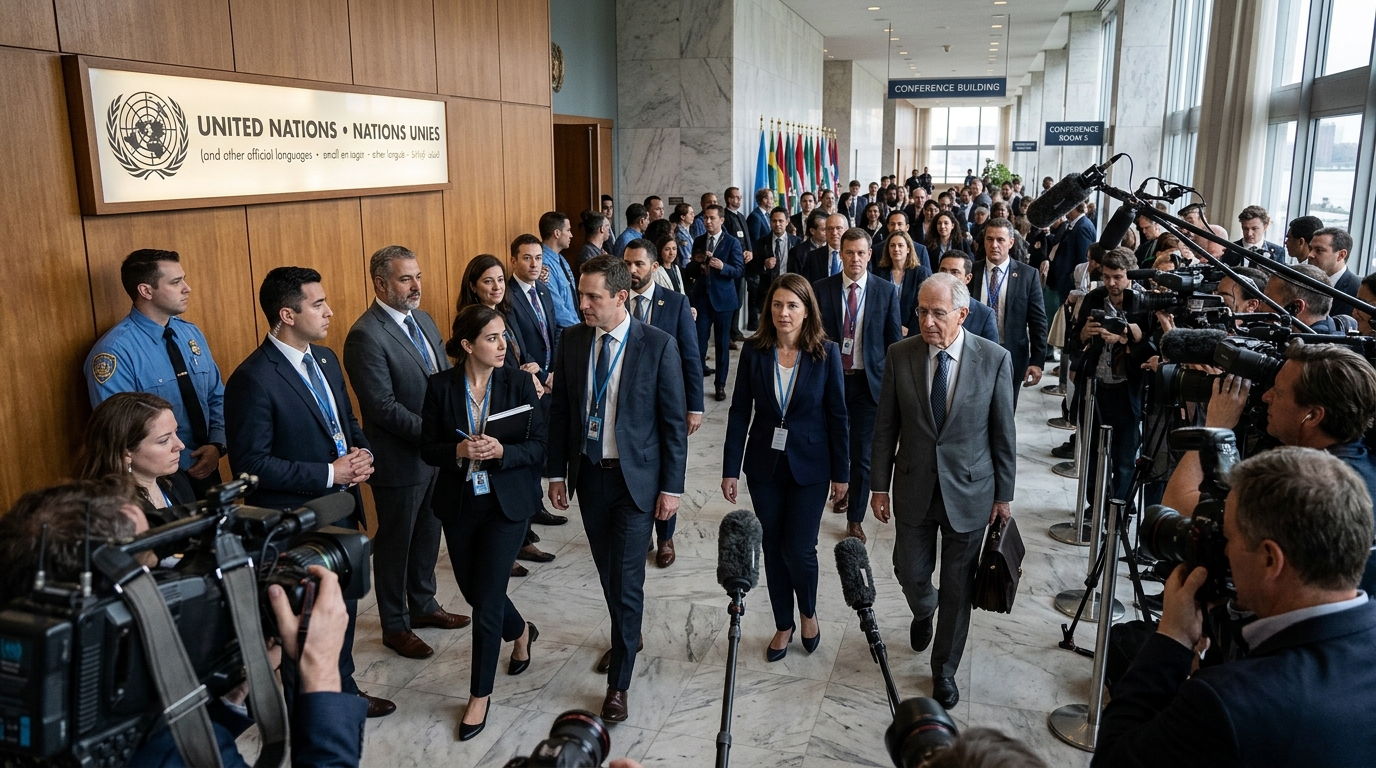
Artificial intelligence policy moved from corporate conference stages to the diplomatic arena, as the leaders of OpenAI and Anthropic used the United Nations to argue for international cooperation on AI governance.
The development was reported by both CNBC and MarketWatch, giving the story stronger support than a single-source policy headline. According to those reports, the companies’ chief executives called for coordinated action as concerns around AI safety, competition and oversight continue to grow. CNBC added that the push came after President Donald Trump rebuffed what he described as a “globalist scheme” to control the technology, underscoring the political resistance such efforts may face in the United States.
Why this matters for markets
For investors, the significance is not limited to the optics of U.N. engagement. AI has become one of the market’s most important valuation themes, affecting semiconductor makers, cloud platforms, enterprise software providers, cybersecurity firms and consumer internet companies. Any shift toward international norms, common reporting standards or cross-border compliance frameworks could influence both cost structures and competitive dynamics.
That is especially relevant at a time when AI enthusiasm is already broadening beyond chips and model developers. Today’s headlines included Investing.com coverage of Meta unveiling a new handheld AI device called Meta Charm, and CNBC reporting that Mark Zuckerberg introduced $1,299 Meta VR glasses and a Muse Charm pendant as part of a wider AI agent push. Meanwhile, Yahoo Finance reported that Palo Alto Networks launched an AI-powered cybersecurity service using Claude and GPT models. Together, those stories show how quickly AI is spreading into hardware, security and consumer interfaces.
Policy uncertainty could shape the next phase
The immediate market challenge is that AI policy still lacks a stable center of gravity. The U.N. platform gives the cooperation push international visibility, but that does not guarantee binding rules or synchronized enforcement. In fact, the political tension highlighted by CNBC suggests the opposite risk: companies may face a patchwork of national approaches, with some governments favoring faster deployment and others prioritizing tighter controls.
That matters because fragmented regulation can benefit the largest firms while creating obstacles for smaller competitors. Large-cap technology groups typically have deeper legal, compliance and computing resources. If reporting, testing or governance obligations increase, dominant platforms could be better positioned to absorb those costs.
At the same time, a clearer framework may reduce uncertainty for enterprise adoption. Many large customers have been interested in generative AI but cautious about legal liability, data handling and auditability. International cooperation—even if initially voluntary—could support wider deployment by setting expectations around transparency and safety.
Hardware and platform competition is intensifying
The broader context is a race to define the user experience around AI. Meta’s device announcements suggest a belief that wearables and ambient computing will play a meaningful role in consumer AI adoption. If that view proves right, the competitive map may expand beyond model quality and cloud distribution to include devices, operating systems and persistent AI assistants.
That trend also raises the stakes for policymakers. Once AI is embedded more directly into consumer hardware and workplace tools, governance questions shift from abstract future risk to practical issues such as content provenance, user privacy, automated decision-making and cross-border data use.
The U.N. intervention by OpenAI and Anthropic can therefore be read as both a policy appeal and a strategic signal. Companies building frontier systems may prefer a seat at the table while rules are still taking shape, rather than adapting later to standards designed without their direct input.
What investors may watch next
Near term, markets are likely to focus on whether the U.N. messaging leads to any concrete proposals, voluntary frameworks or multilateral working groups. Investors may also watch for responses from major governments, especially the United States, China and the European Union, since those jurisdictions hold outsized influence over AI deployment and capital spending.
For listed equities, the read-through is strongest for megacap technology firms, AI infrastructure suppliers and software companies whose products depend on broad enterprise trust. The story is less about an immediate earnings impact and more about the rules that may shape the next wave of monetization.
Neutral outlook: The U.N. push adds a new layer of policy scrutiny to an already crowded AI trade, with long-term implications likely to matter more than any single day’s market reaction.
MarketPro reports are AI-assisted analyses of publicly reported market news. Not investment advice.