China Growth Beats Estimates as Exports Lift Q3 GDP
China’s economy grew faster than expected in the third quarter, with headline growth supported by stronger exports, according to a CNBC report citing official data. For global investors, the release matters not only as a signal on domestic demand in the world’s second-largest economy, but also as a read-through for regional trade, commodity demand and broader risk sentiment across Asia.
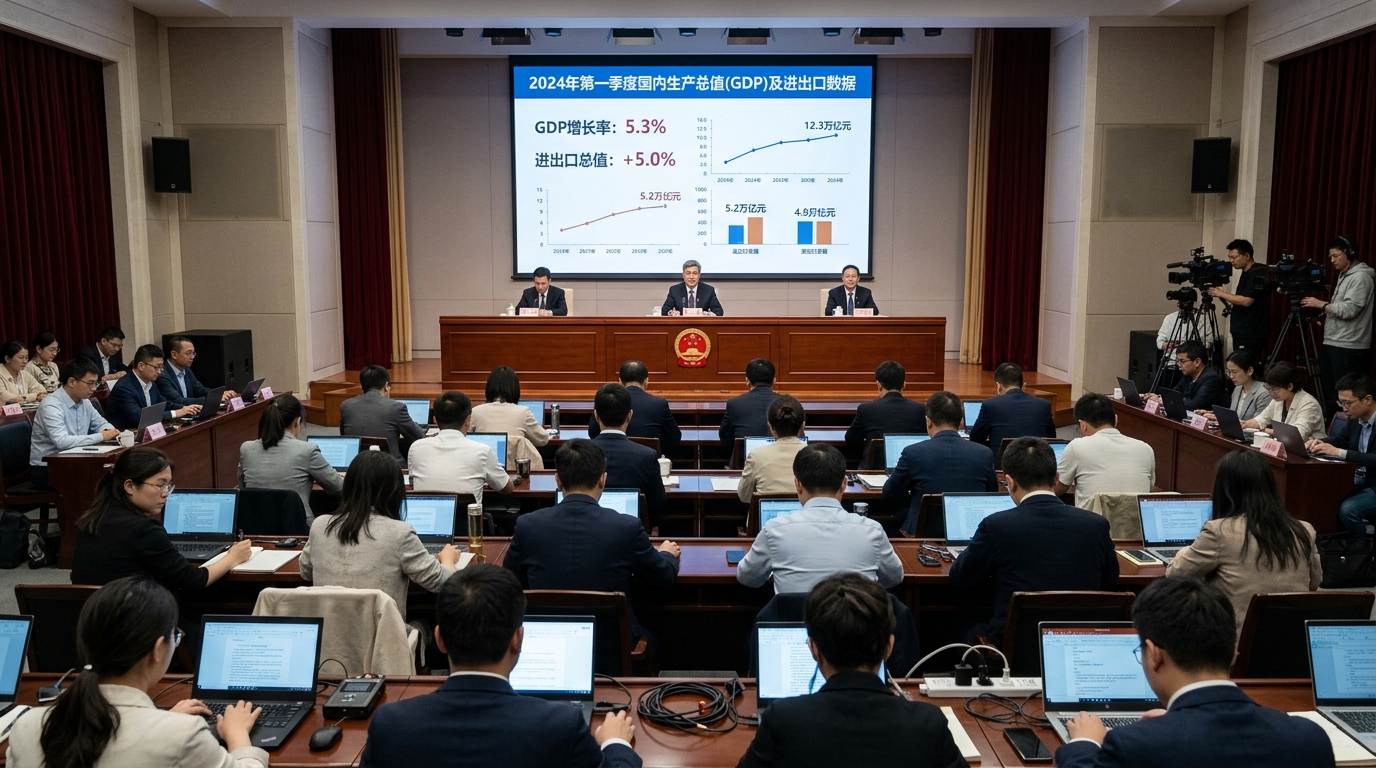
CNBC reported that China’s third-quarter economic growth quickened to 4.5%, beating estimates, as exports surged. That combination is notable because it suggests external demand provided support even as investors continue to debate the durability of China’s domestic recovery. Export strength can cushion growth in the short term, but markets will likely keep asking whether household spending, private investment and property-related activity are improving enough to sustain momentum.
Why the GDP beat matters for markets
A growth print above expectations can affect several market channels at once. First, it can stabilize sentiment toward Asian equities and currencies by reducing immediate fears of a sharper slowdown in China. Second, it can influence views on global supply chains and manufacturing demand, particularly for economies closely tied to Chinese trade flows. Third, it can shape expectations for Beijing policy support: stronger-than-expected data may lower pressure for near-term large-scale stimulus, even if policymakers remain focused on maintaining stable growth.
The export component is especially important. Trade-sensitive markets have been watching for signs that Chinese manufacturers are regaining footing after a period of uneven global demand. If export momentum proves durable, that may support industrial activity and shipping volumes. At the same time, investors will want to see whether stronger exports are broad-based or concentrated in a narrower set of sectors.
Signals for Asia and beyond
The data arrives as investors are also monitoring stress in other parts of Asia, including weakness in Indonesian equities and continued scrutiny of China-linked technology names. A firmer Chinese growth reading does not automatically resolve those pressures, but it can change the market backdrop by offering a stronger macro anchor for the region.
For multinational companies, Chinese growth data is still a key indicator for revenue exposure across autos, luxury goods, industrials, semiconductors and commodities. While the CNBC report focused on the GDP surprise and export contribution, the market interpretation will likely extend further, into earnings expectations for global firms with large China businesses.
What investors will watch next
The main question after a better GDP print is whether the improvement reflects a durable trend or a temporary lift from trade flows. Investors are likely to focus on:
- Domestic demand: whether consumption and private-sector confidence improve alongside headline growth.
- Policy direction: whether Beijing signals further targeted support or leans on the stronger data to hold current settings.
- Trade resilience: whether export strength continues amid shifting global demand conditions.
- Regional spillovers: how Asian equities, currencies and commodity-linked markets respond.
There is also a valuation angle. Better macro data can help support cyclical and trade-sensitive shares, but investors may remain selective if they believe structural concerns in parts of the Chinese economy have not been fully resolved. In other words, a positive surprise in growth may improve sentiment without fully resetting longer-term caution.
A broader macro test
China’s growth print lands at a time when global markets remain highly sensitive to cross-border demand signals. With borrowing costs, geopolitics and trade frictions all competing for investor attention, any sign of stabilization in China carries outsized importance. A stronger-than-expected quarter does not remove those wider pressures, but it does provide a clearer data point that the external side of the economy has recently offered support.
According to CNBC, that support came from surging exports, which helped lift third-quarter growth above forecasts. The next phase for markets will be determining whether that strength can broaden into a more balanced recovery.
Neutral outlook: The GDP beat may steady sentiment toward China and Asia in the near term, but markets will likely wait for follow-through in domestic demand and policy signals before drawing stronger conclusions.
MarketPro reports are AI-assisted analyses of publicly reported market news. Not investment advice.