CME’s New BCH and Uniswap Futures Extend Crypto Market Depth
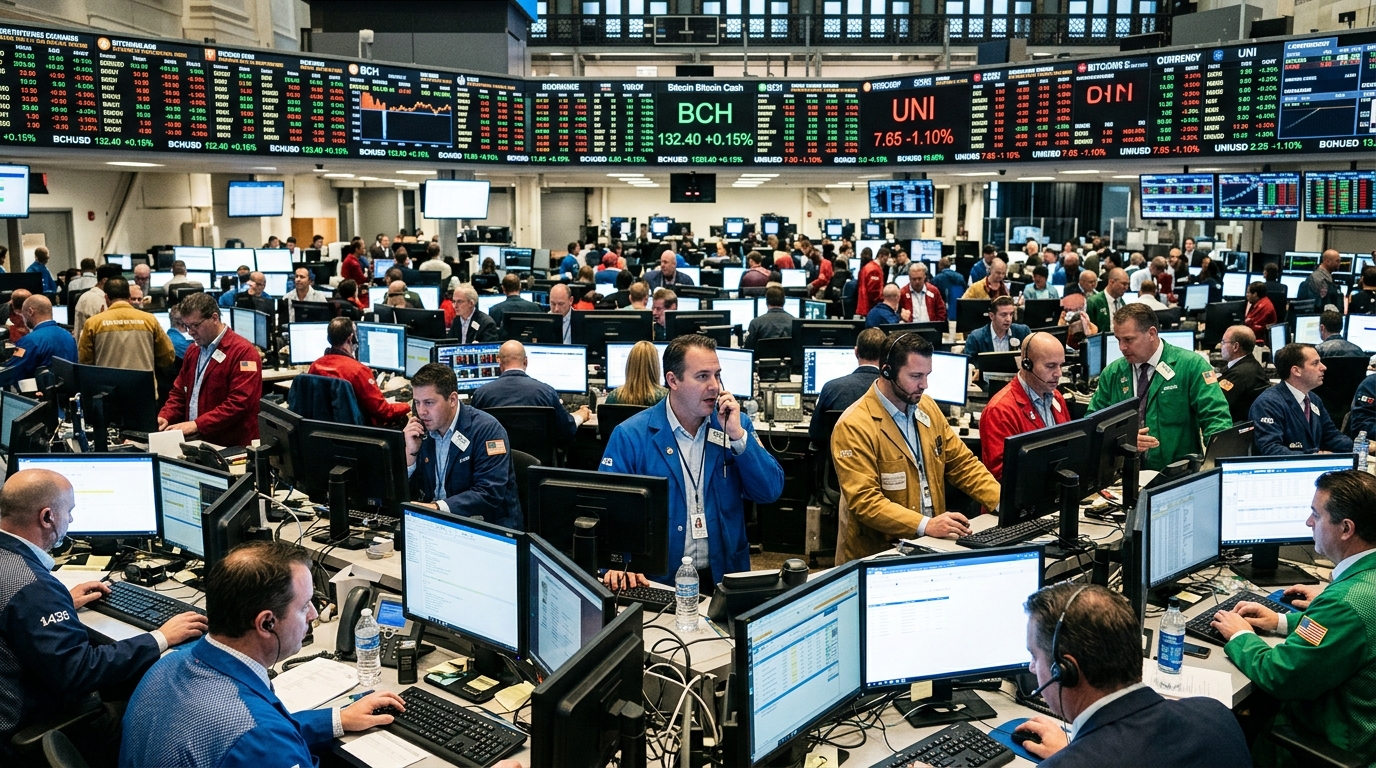
Yahoo Finance reported that CME Group plans to launch Bitcoin Cash and Uniswap futures, a move that points to continued expansion in regulated crypto derivatives rather than another simple price-rally story.
That distinction matters. Crypto markets have no shortage of headlines about token moves, but exchange-listed futures are a market-structure development with broader implications for liquidity, hedging and institutional participation. For readers tracking where digital assets are becoming more integrated with traditional finance, this is a more durable signal than a short-term jump in prices.
Why CME’s move matters
CME Group is one of the best-known derivatives marketplaces in traditional finance. When it adds new crypto-linked contracts, the significance goes beyond the underlying tokens themselves. It can give professional investors, trading firms and institutional desks more standardized tools for gaining exposure or managing risk.
According to Yahoo Finance, the planned launch covers both Bitcoin Cash and Uniswap futures. Those assets represent two different parts of the digital-asset market: Bitcoin Cash as an older, payments-oriented cryptocurrency linked to the broader Bitcoin ecosystem, and Uniswap as a token associated with decentralized-finance infrastructure.
The combination suggests regulated venues are not limiting their product range to only the largest crypto assets. Instead, they appear willing to extend listed derivatives further into the market, provided demand and compliance frameworks support it.
From price speculation to market infrastructure
This story stands out because it is fundamentally about infrastructure. Futures contracts can help shape how capital enters a market. They can offer a reference price, a venue for hedging and a mechanism for expressing views without directly holding the underlying asset.
For institutions that face custody, compliance or operational constraints around spot crypto holdings, listed derivatives can be easier to integrate into existing risk systems. That does not automatically mean adoption will surge, but it does broaden the toolkit available to professional market participants.
It also reflects a wider trend: regulated crypto products are becoming more specialized. Rather than focusing only on the largest coins, exchanges and financial firms are gradually building a deeper menu of products tied to different sectors of the digital-asset economy.
Why this is different from recently covered stablecoin news
MarketPro has already covered a separate stablecoin-distribution story, so this development adds a fresh angle without repeating that theme. The news here is not about payments reach or token issuance. It is about the derivatives layer of crypto finance and how regulated exchanges are broadening access to non-core assets.
That makes the article relevant for readers interested in crypto market plumbing, especially as institutional participation increasingly depends on products that fit within established legal and operational frameworks.
What traders and investors may watch
The launch itself is only the first step. Market participants will likely watch several follow-on questions:
- Liquidity: Whether the new contracts attract meaningful volume and open interest.
- Institutional use: Whether the products are used primarily for directional trading or for hedging existing exposures.
- Broader product expansion: Whether other exchanges respond with similar listings tied to decentralized-finance or mid-cap crypto assets.
- Price discovery: Whether regulated futures begin to play a larger role in shaping sentiment around BCH and UNI.
Those questions matter because not every listed crypto contract becomes central to the market. Some remain niche instruments, while others help define the next stage of institutional adoption.
A sign of a maturing crypto ecosystem
Even with limited details in the headline, the direction is clear. According to Yahoo Finance, CME is extending its crypto derivatives offering to additional assets, reinforcing the idea that regulated market access is expanding in scope.
For the broader crypto sector, that is notable because maturing markets usually develop in layers: spot trading, custody, settlement, listed derivatives and then more specialized risk tools. Each layer can make the asset class easier for established financial players to navigate.
This does not settle the debate over which tokens will see lasting institutional demand. But it does show that major financial infrastructure providers still see room to add crypto products in a regulated format.
Neutral outlook
Based on the Yahoo Finance report, CME’s planned Bitcoin Cash and Uniswap futures launch is a structural development for crypto markets. The next key measure will be whether trading activity proves that demand for regulated exposure is broadening beyond the largest digital assets.
MarketPro reports are AI-assisted analyses of publicly reported market news. Not investment advice.