Fed’s Barkin Flags Firmer Economy, Broader Inflation Risks
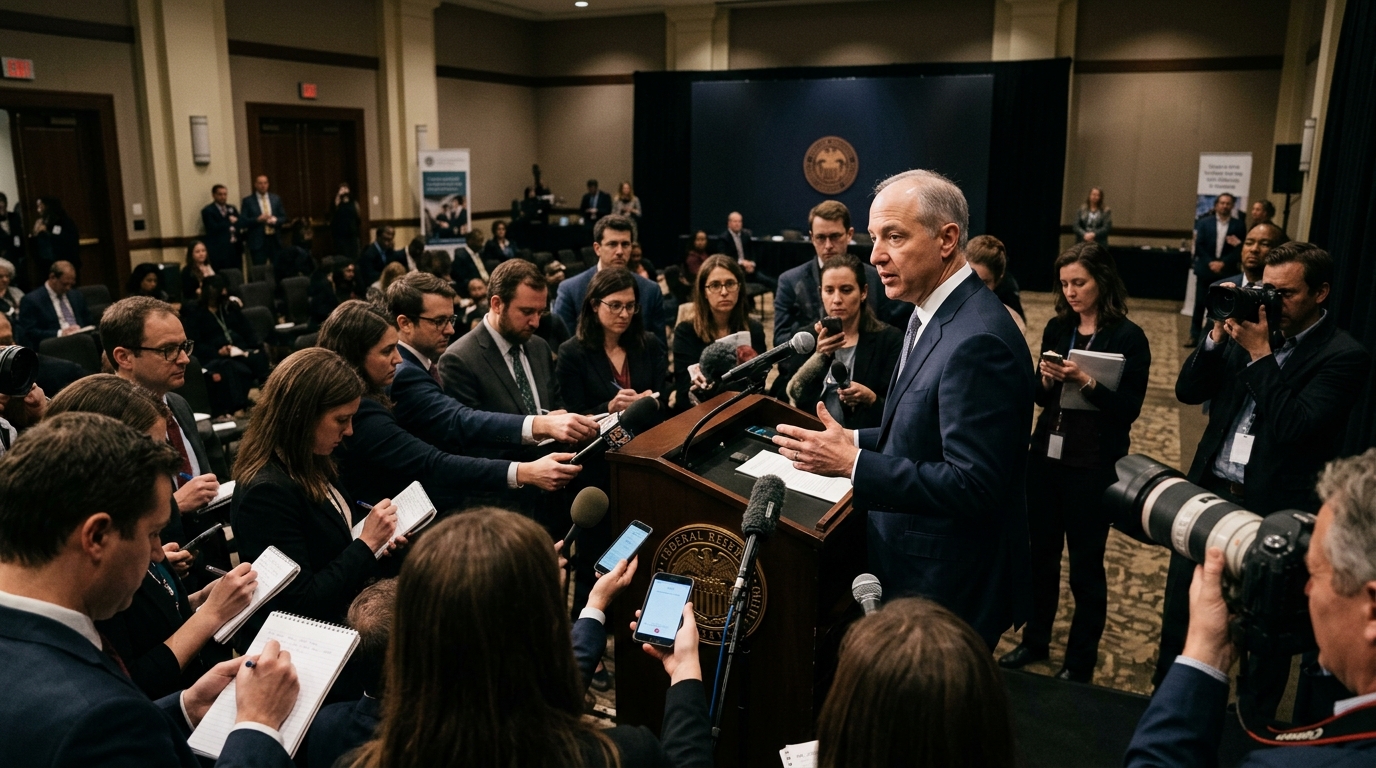
Currency markets received a fresh policy signal after Yahoo Finance reported that Federal Reserve official Thomas Barkin said the U.S. economy may be firming and that inflation pressures are not limited to energy, while also pointing to tariff shocks.
The remarks matter because they arrive at a time when investors are trying to judge whether the next major move in rates expectations will come from slowing growth concerns or renewed inflation persistence. If policymakers increasingly lean toward the latter view, that can influence Treasury yields, the U.S. dollar and global risk sentiment.
Why Barkin’s comments matter now
According to the Yahoo Finance headline, Barkin’s message had three clear elements: the economy may be firming, inflation is broader than energy, and tariffs can create price shocks. Even without a full transcript, that combination is meaningful for foreign-exchange markets because it suggests policy caution rather than confidence that inflation pressures are fading cleanly.
For dollar traders, the significance is straightforward. When a Fed official emphasizes resilience in economic activity and flags wider inflation risks, markets may see less urgency for rate cuts and greater willingness by the central bank to keep policy restrictive if needed. That does not guarantee a stronger dollar, but it can support the currency by pushing back against expectations of rapid easing.
A broader inflation debate is back in focus
The headline’s reference to inflation “not limited to energy” is especially important. In recent months, commodity-linked price moves have often dominated inflation conversations. Barkin’s framing, as reported by Yahoo Finance, suggests policymakers are also watching whether price pressure is spreading through other parts of the economy.
That distinction matters because central banks typically respond differently to a temporary energy spike than to broader inflation persistence. If energy is the only problem, policymakers may look through some of the volatility. If inflation is showing up more widely, the threshold for policy patience becomes higher.
The mention of tariff shocks also adds another layer. Tariffs can raise input costs, alter trade flows and introduce uncertainty into pricing decisions across industries. In currency markets, that can strengthen the link between trade policy headlines and rate expectations, especially when the Fed is still balancing inflation risks against growth concerns.
What the forex market may watch next
For the foreign-exchange market, Barkin’s comments reinforce several near-term watch points:
- Rate expectations: Any repricing of the path for U.S. interest rates can quickly feed into dollar positioning.
- Inflation breadth: Markets will be sensitive to data or Fed commentary that either confirms or challenges the idea that price pressures are broadening.
- Trade policy impact: If tariff-related shocks become a larger part of the inflation debate, traders may pay closer attention to import prices and corporate pricing commentary.
This is particularly relevant for currencies that are highly sensitive to relative rate differentials. A more cautious Fed can affect not just the major pairs, but also emerging-market currencies that react sharply to changes in U.S. yields and global liquidity conditions.
Why this stands out as a new markets catalyst
MarketPro’s recent coverage has already focused on broad dollar moves and general Fed tone, so the value here is the more specific policy signal. Barkin’s comments, as summarized by Yahoo Finance, introduce a fresh angle: concern that inflation pressure may not be confined to energy and that tariffs could complicate the policy outlook.
That makes this a more actionable macro narrative for global markets coverage than a generic “Fed watch” story. It ties together growth resilience, inflation composition and trade-related price shocks — all of which matter directly for currencies and cross-asset pricing.
It also fits a broader pattern in global markets: investors are increasingly forced to weigh policy risk and geopolitical trade friction at the same time. Even modest shifts in central-bank language can have an outsized effect when markets are already uncertain about inflation’s path.
Neutral outlook
Based on the Yahoo Finance report, Barkin’s comments add a firmer, more inflation-aware note to the U.S. rates discussion. The next test for forex markets will be whether upcoming data and further Fed communication support that view or soften it.
MarketPro reports are AI-assisted analyses of publicly reported market news. Not investment advice.