CoreWeave debt fears spread as AI trade hit across tech
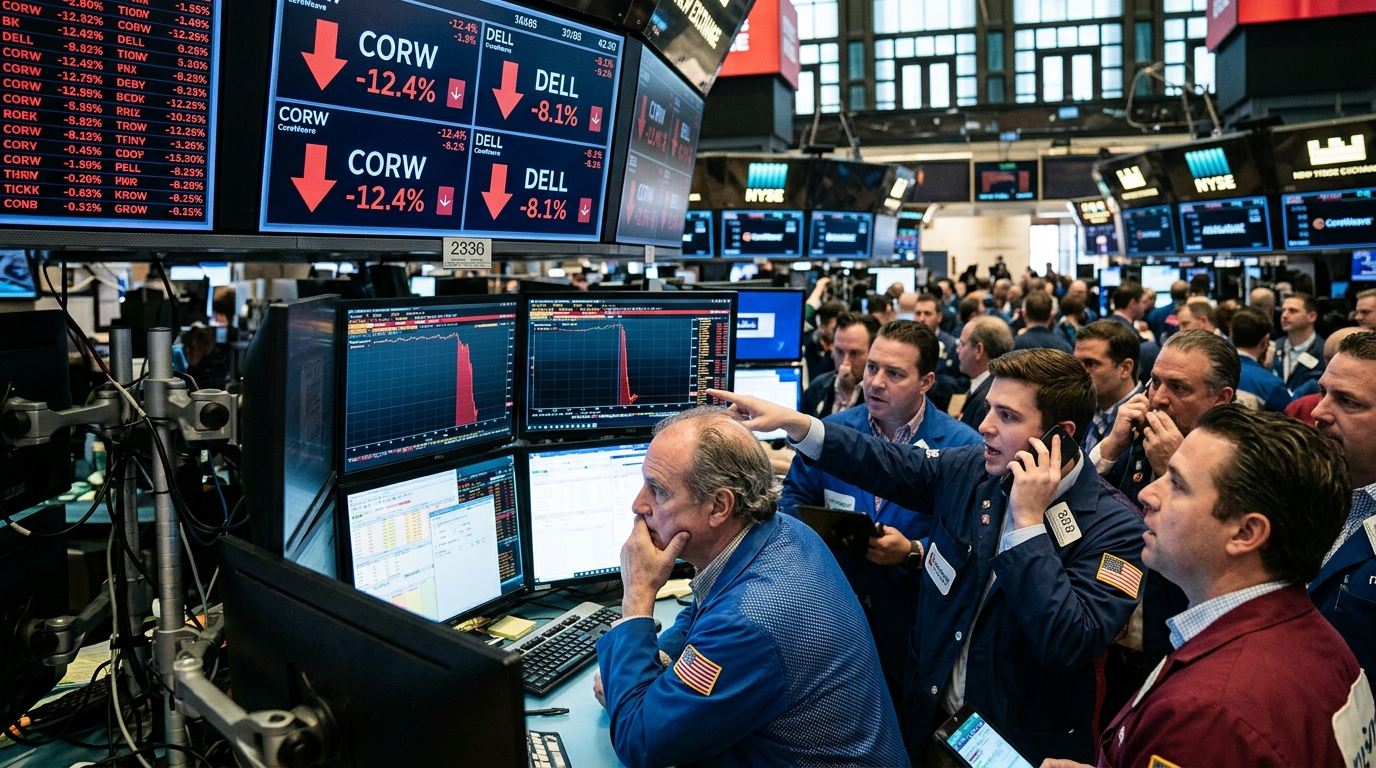
Pressure on the artificial-intelligence equity trade broadened after fresh signs that investors are becoming more selective about both financing risk and near-term demand. Reports from CNBC and MarketWatch pointed to a sharp slide in CoreWeave shares and weakness in Dell, with the moves feeding a wider sell-off across data-center and so-called neocloud names.
According to CNBC, CoreWeave shares tumbled as bond yields approached 15% amid concern about an AI borrowing binge. MarketWatch separately reported that CoreWeave’s AI bonds were tumbling, raising red flags for the wider market. The cross-confirmation matters because it shows stress is not limited to equity sentiment alone; investors are also demanding much higher compensation in credit markets.
Dell added to the pressure. CNBC reported that Dell stock plunged 11%, leading a data-center sell-off as fears mounted about “enterprise AI timing.” MarketWatch likewise highlighted Dell as one of the S&P 500’s biggest laggards on Wednesday. Taken together, the headlines suggest the market is reassessing two key assumptions that have supported AI-linked stocks: that capital will remain readily available for infrastructure build-outs, and that corporate customers will quickly convert AI interest into large-scale spending.
Why the market reaction matters
The latest moves are notable because they connect two areas that investors had often treated separately. On one side is the infrastructure financing story, where companies tied to AI capacity expansion have relied on investor willingness to fund rapid growth. On the other is the enterprise demand story, where hardware and server suppliers have been priced for sustained order momentum. Wednesday’s headlines suggest both pillars came under pressure at the same time.
When a company’s bond yields jump, equity investors often read that as a signal that funding costs may rise and risk tolerance may be falling. In a market segment already associated with aggressive spending, a jump in yields can quickly reshape valuation assumptions. That is especially relevant for AI-linked companies whose business models depend on heavy up-front investment in computing capacity.
Dell’s decline adds another layer. The concern flagged by CNBC around enterprise AI timing implies investors may be questioning not just whether spending will arrive, but when. Timing matters because highly valued growth stories can be sensitive to even short delays in revenue realization, especially when broader yields are elevated.
From stock story to market structure story
This is increasingly more than a single-stock sell-off. CNBC also reported that traders piled into “bubble puts” on CoreWeave as neocloud stocks plunged. That points to a shift in market positioning, with investors seeking downside protection or speculating on further declines. The use of options to express bearish views can amplify volatility in already crowded themes.
The broader significance is that AI exposure has been one of the market’s dominant narratives. When the market starts to distinguish between companies with durable cash generation and companies seen as more dependent on capital markets, leadership can narrow quickly. Credit stress, equity losses and options activity together suggest that repricing is becoming more systemic within the higher-risk end of the AI complex.
Key issues investors are now watching
- Financing costs: Rising bond yields can make expansion plans more expensive for capital-intensive AI companies.
- Demand timing: Dell’s sell-off shows sensitivity to any sign that enterprise AI spending may take longer to materialize.
- Risk appetite: Heavy options activity around downside protection indicates fading tolerance for speculative valuations.
- Spillover risk: Weakness in one AI-linked credit or equity name can spread to peers through sentiment and positioning.
The market backdrop also matters. Elevated yields more generally can put pressure on long-duration growth trades, particularly where valuations rely on future growth rather than current profitability. In that environment, AI beneficiaries are less likely to move as a single group and more likely to be judged on balance-sheet resilience, funding access and evidence of monetization.
What Wednesday’s headlines do not yet prove is a lasting break in the AI investment cycle. But they do show that the market is becoming more demanding. The easy phase, where thematic enthusiasm could outweigh funding concerns or execution questions, appears to be facing a stiffer test.
Neutral outlook: According to CNBC and MarketWatch reports, the immediate issue is whether pressure in CoreWeave’s debt and Dell’s equity performance remains contained or develops into a broader reassessment of AI-related valuations and financing risk.
MarketPro reports are AI-assisted analyses of publicly reported market news. Not investment advice.