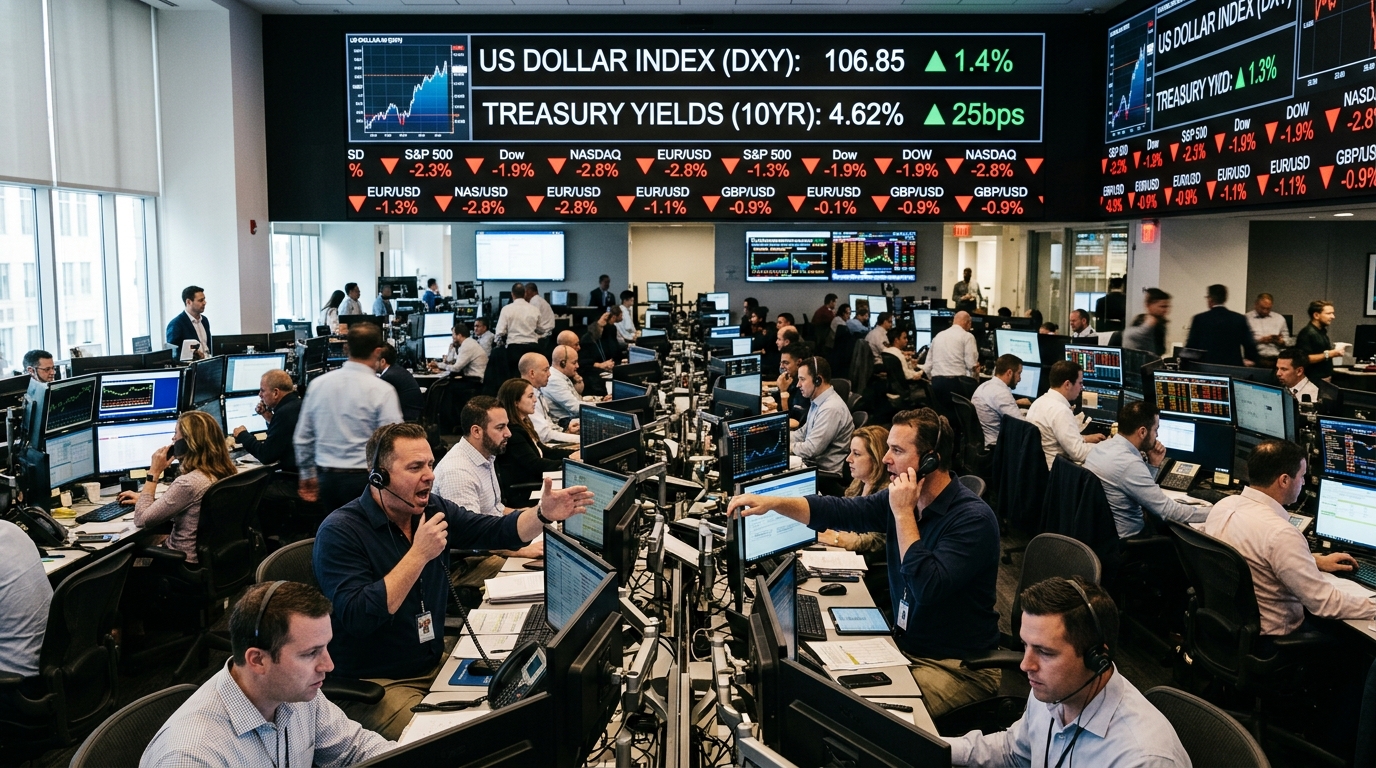
Hot inflation and yields revive dollar-policy dilemma

Fresh U.S. inflation headlines and a renewed jump in bond yields are putting foreign-exchange markets back at the center of the macro story, as investors reassess how long U.S. interest rates may need to stay high.
The broad picture is supported by multiple reports. CNBC published a September 2026 inflation breakdown, while MarketWatch separately highlighted the forces driving inflation higher and said rising yields and firmer price pressures have left the Federal Reserve in a rate-hike dilemma. Taken together, those reports point to the same market conclusion: inflation is not cooling cleanly enough to give policymakers an easy path.
Why FX markets are paying attention
For currency traders, the combination of sticky inflation and higher Treasury yields matters because it can reinforce support for the U.S. dollar. If markets believe the Fed must keep policy restrictive for longer, or even contemplate additional tightening, U.S. rate expectations can remain elevated relative to other major economies.
According to MarketWatch reports, rising bond yields and higher inflation are leaving the Fed “trapped” in a difficult policy position. CNBC’s inflation coverage adds the underlying detail by showing where price pressure is concentrated rather than simply whether the headline number rose or fell. That distinction matters for FX because persistent categories of inflation tend to have a larger effect on rate expectations than one-off moves.
In practical terms, the dollar tends to draw support when:
- Inflation proves broader than expected, not limited to a narrow set of volatile items.
- Treasury yields move higher, lifting the return on dollar assets.
- The Fed’s easing path is questioned, forcing repricing across currency and rates markets.
What is driving the inflation concern
MarketWatch identified three drivers pushing inflation higher, while another of its reports said rising diesel prices are adding to the inflation impulse. CNBC also separately focused on diesel pressures in its coverage of the political and economic fallout. Although the headline set does not provide a full official decomposition beyond CNBC’s inflation chart coverage, the cross-source message is clear: energy-related costs are again feeding concern that inflation could remain stubborn.
That is especially important for FX because energy-driven inflation can complicate central-bank communication. Policymakers often try to look through temporary commodity spikes, but when those increases begin to affect transport costs, consumer expectations or broader business pricing, markets may doubt that inflation will fade quickly on its own.
The result is a tougher backdrop for currencies that are more sensitive to global growth or easier monetary policy. By contrast, the dollar can benefit when investors move toward safety and yield at the same time.
Yields are doing part of the tightening
One reason this moment is delicate is that bond markets are already applying pressure without any immediate policy move. Higher yields tighten financial conditions by raising borrowing costs across mortgages, corporate credit and government finance.
MarketWatch’s framing of a Fed dilemma captures that tension. If inflation stays firm, the central bank risks appearing too passive. But if yields continue rising sharply on their own, additional policy tightening could increase stress elsewhere in the economy. For FX markets, that creates two-way volatility: the dollar may gain from higher yields, but traders must also watch whether tighter conditions begin to weigh more materially on growth expectations.
Broader market spillovers
The inflation-yield story is not isolated to currencies. It spills into equities, credit and commodities. Higher yields can pressure richly valued growth sectors, and persistent inflation can shape expectations for oil-sensitive and consumer-facing industries. But in cross-asset terms, FX is often where the macro repricing shows up fastest, especially when investors are recalculating the likely path of U.S. rates.
Reader interest on MarketPro has consistently favored macro and cross-asset stories, and this setup fits that pattern: one inflation print is now feeding through to rates, the dollar and global risk appetite.
What to watch next
The next question for markets is whether incoming data confirm that inflation pressure is becoming more entrenched or whether this proves to be a shorter-lived flare-up. According to CNBC and MarketWatch reports, investors are now focused less on a single headline number and more on the underlying composition of price growth and the response in yields.
Neutral outlook: As long as inflation remains firm and Treasury yields stay elevated, the dollar and rate-sensitive FX pairs are likely to remain closely tied to shifting expectations around how constrained the Fed has become.
MarketPro reports are AI-assisted analyses of publicly reported market news. Not investment advice.