India Confirms U.S. Trade Impasse, Raising FX Focus
India’s confirmation that its trade talks with the United States remain stuck adds a fresh policy risk for markets already watching tariffs, supply chains and Asian currency sensitivity to trade headlines.
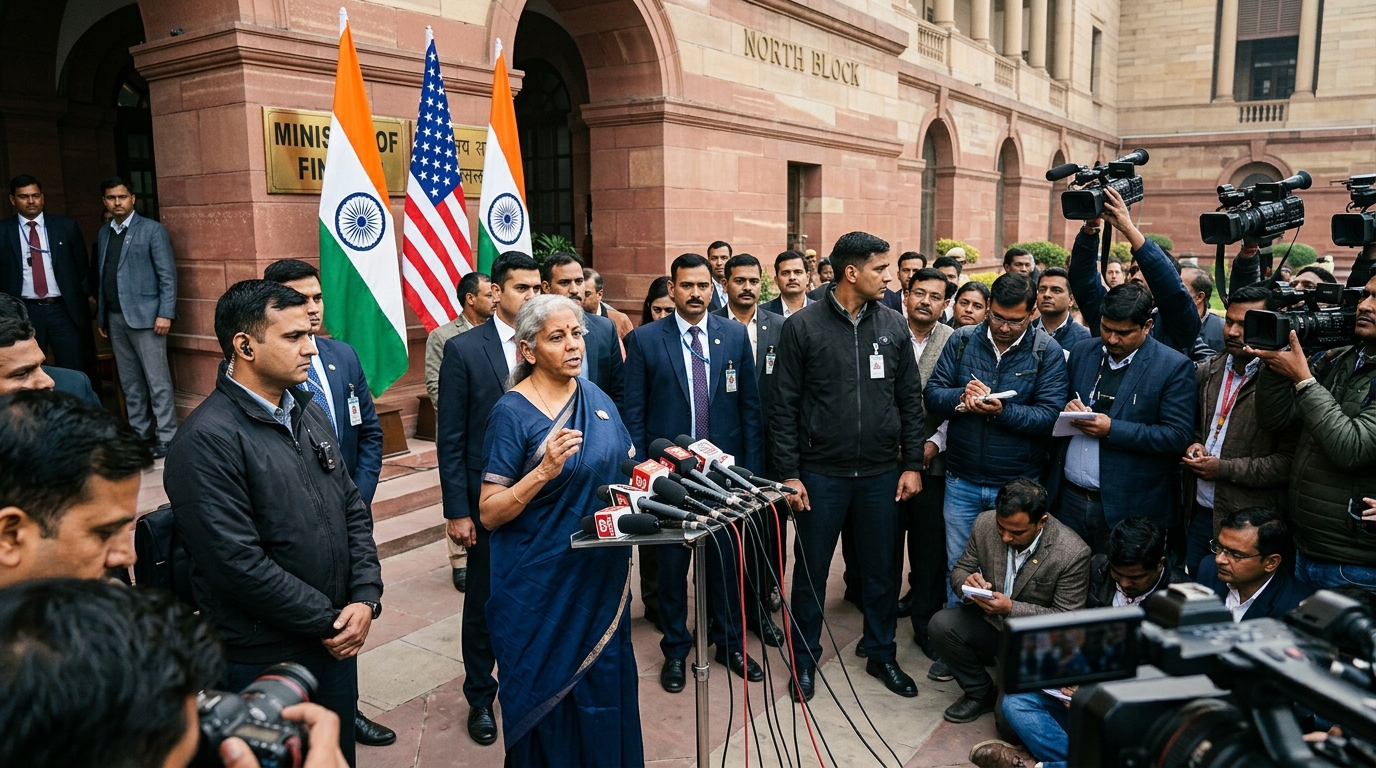
According to CNBC, India’s finance minister said there is little room for “giving and taking” in the current negotiations, underscoring a clear impasse with Washington. The remark matters because India-U.S. trade ties sit at the intersection of manufacturing strategy, services exports, investment flows and broader geopolitical positioning.
For financial markets, the significance goes beyond diplomacy. When two major economies signal limited room for compromise, investors tend to look quickly at currencies, export sectors and companies exposed to cross-border production shifts.
Why the impasse matters now
India has been trying to expand its role in global supply chains, while the United States remains a crucial market for goods and services. A prolonged trade deadlock could complicate that trajectory, especially if it affects tariff arrangements, market access or regulatory treatment in sectors where business planning depends on policy predictability.
According to CNBC, the finance minister’s comments suggested negotiations have reached a difficult point rather than a near-term closing stage. That shifts attention from breakthrough expectations toward damage-limitation questions: what parts of the relationship remain insulated, and where friction could intensify.
This is particularly relevant for sectors tied to manufacturing diversification and cross-border corporate investment. If firms perceive a less stable trade framework, they may delay decisions on sourcing, plant expansion or export commitments.
Why forex markets may pay attention
Trade tensions do not automatically produce sharp currency moves, but they can change the background conditions for FX trading. In India’s case, any sign of prolonged friction with the U.S. can feed into market thinking about export earnings, portfolio sentiment and the policy burden on domestic authorities.
Forex markets often react not only to actual trade measures but also to the tone of negotiations. A hardened stance can matter because it reduces the probability of a quick compromise and increases uncertainty around future bilateral terms.
Traders and economists may watch several channels:
- Goods and services exports: Whether uncertainty affects demand visibility for India-linked sectors
- Capital flows: Whether global investors reassess exposure to trade-sensitive assets
- Relative policy outlook: Whether external friction influences expectations for domestic support measures
- Regional comparison: How India is positioned relative to other Asian economies competing for investment and manufacturing capacity
That does not mean an immediate market dislocation is inevitable. But tougher rhetoric can be enough to keep the rupee and related assets under closer watch, especially in an environment where global investors are already sensitive to trade fragmentation.
Broader implications for supply chains and policy
The India-U.S. relationship has been closely watched because it combines trade, technology and strategic alignment. A visible impasse introduces friction into a story many businesses had viewed as structurally supportive over the medium term.
It may also complicate efforts by companies trying to build alternatives to concentrated manufacturing networks elsewhere in Asia. If trade uncertainty rises, businesses may still pursue India exposure, but with more caution around timelines, compliance and cost assumptions.
The comments reported by CNBC therefore matter not just as a bilateral negotiating signal, but as a broader message to global companies assessing how durable India’s external commercial environment may be.
Markets will look for tone as much as substance
At this stage, the most important variable may be whether the rhetoric hardens further or gives way to narrower sector-by-sector negotiation. In many trade disputes, tone can shape markets before any formal measure is enacted.
Investors will likely look for follow-up statements from both governments, along with any signs that specific industries are being prioritized for separate progress. Until then, the lack of room for compromise described by India’s finance minister leaves a more cautious near-term signal for trade-sensitive positioning.
Neutral outlook: The impasse does not yet define the full trajectory of India-U.S. economic ties, but it does raise the importance of policy headlines for rupee watchers, exporters and global firms assessing regional trade exposure.
MarketPro reports are AI-assisted analyses of publicly reported market news. Not investment advice.