Wall Street’s growing dominance tests market rally depth
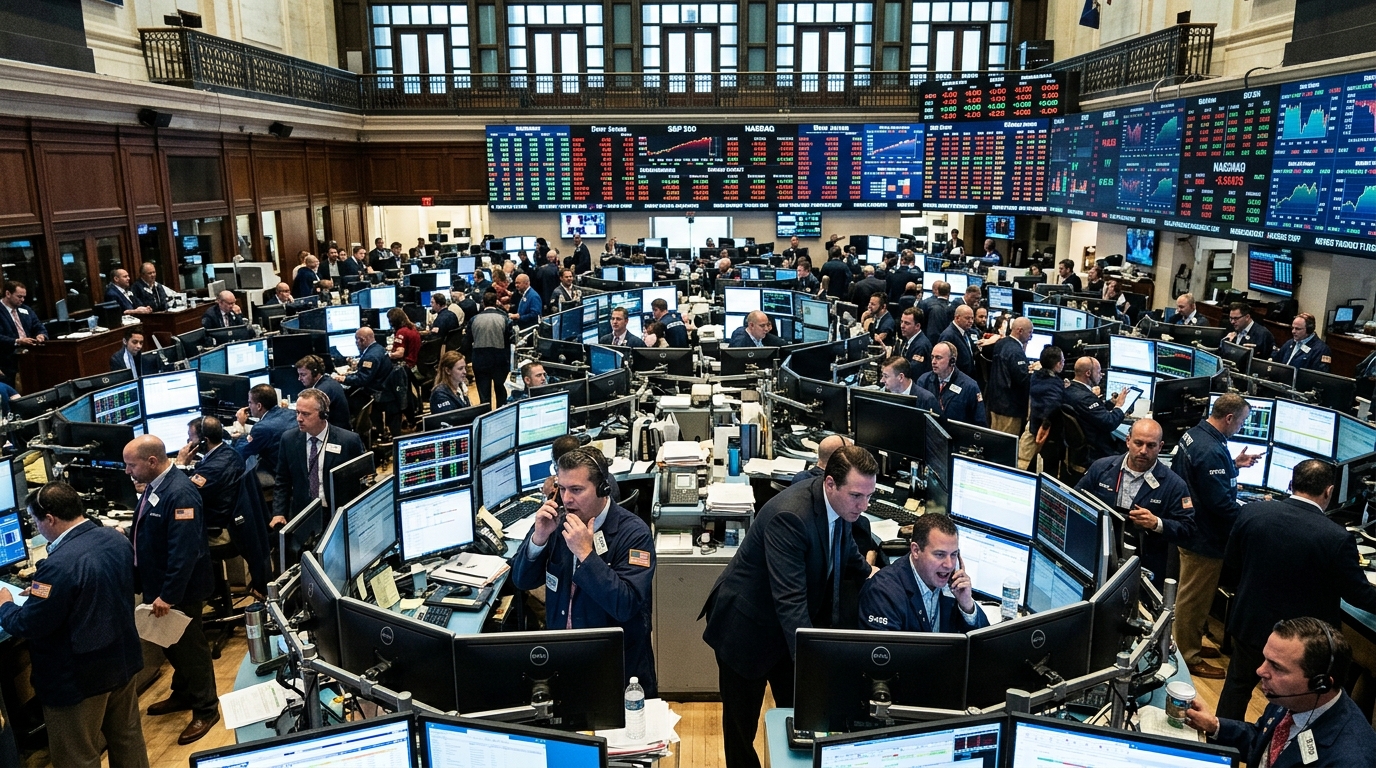
Wall Street’s biggest institutions are reasserting themselves as the main force in U.S. equities, a shift that may matter more as signs emerge that the broader market rally is becoming less uniform.
According to a CNBC report, professional money managers are taking back a larger role from small investors in driving stock-market moves. That change comes as a MarketWatch report says investors should look more closely at the rally because cracks are starting to show beneath the surface.
Why the shift in market leadership matters
When retail traders dominate flows, momentum can spread quickly across speculative corners of the market. When institutional capital becomes more influential, market direction often depends more heavily on earnings durability, valuations, balance-sheet quality and macroeconomic sensitivity. That does not automatically make the market safer. It can instead mean a more selective environment in which fewer stocks carry a larger share of gains.
CNBC’s report points to Wall Street money, rather than small investors, becoming the market’s main engine again. In practical terms, that suggests hedge funds, mutual funds, pension managers and other professional investors may now be playing a bigger role in setting prices. For markets, the consequence is usually a stronger focus on fundamentals and positioning, rather than the sentiment-driven bursts often associated with retail trading waves.
At the same time, MarketWatch’s warning that the rally is “showing cracks” suggests investors are watching for narrowing participation. A rally can continue even as leadership thins, but such setups tend to attract closer scrutiny because they can become more vulnerable if the strongest-performing groups stumble.
What investors are watching beneath the headline indexes
Even when major indexes remain resilient, the underlying picture can deteriorate. Analysts often track whether gains are broad-based or concentrated in a relatively small group of stocks. If fewer companies are doing the heavy lifting, headline strength may obscure a weaker internal market backdrop.
That is one reason the return of institutional influence is significant. Professional investors are generally faster to rotate away from crowded trades when valuations stretch or when economic risks shift. If market breadth is weakening, those reallocations can amplify divergence between index performance and the experience of the average stock.
MarketWatch’s framing of a rally with visible cracks aligns with that concern. While the report does not by itself signal an imminent reversal, it does reinforce the idea that the quality of the rally matters as much as the size of the gains.
Why this matters globally
U.S. equities remain central to global portfolio construction. A market increasingly led by institutions and potentially supported by a narrower set of winners has implications well beyond New York. International investors, sovereign funds and cross-asset allocators often use U.S. market leadership as a signal for global risk appetite.
If the rally becomes more selective, global investors may need to think more carefully about sector concentration, factor exposure and liquidity conditions. The issue is not simply whether stocks are rising, but which stocks are rising and why.
This also intersects with a broader macro backdrop in which bond yields have drawn heightened attention, according to other coverage in today’s wires. Higher yields can put pressure on richly valued equities and may encourage institutions to rebalance more actively across stocks, credit and cash-like assets.
Key takeaways from the latest reports
- Market leadership is shifting: CNBC says Wall Street money is taking back the dominant role from small investors.
- Rally quality is under review: MarketWatch reports that the advance in stocks is showing cracks under the surface.
- Institutional influence can raise selectivity: Professional investors tend to focus more on earnings, valuation and macro risk.
- Global portfolios may feel the effect: U.S. market breadth and leadership remain important signals for worldwide risk sentiment.
For now, the combination of stronger institutional influence and a rally facing questions about its internal strength suggests a more discriminating phase for equities rather than a simple risk-on backdrop. The neutral outlook is that investors will likely keep watching breadth, leadership concentration and cross-asset signals for confirmation of whether the rally remains durable.
MarketPro reports are AI-assisted analyses of publicly reported market news. Not investment advice.