Anthropic ruling keeps U.S. supply-chain scrutiny in focus
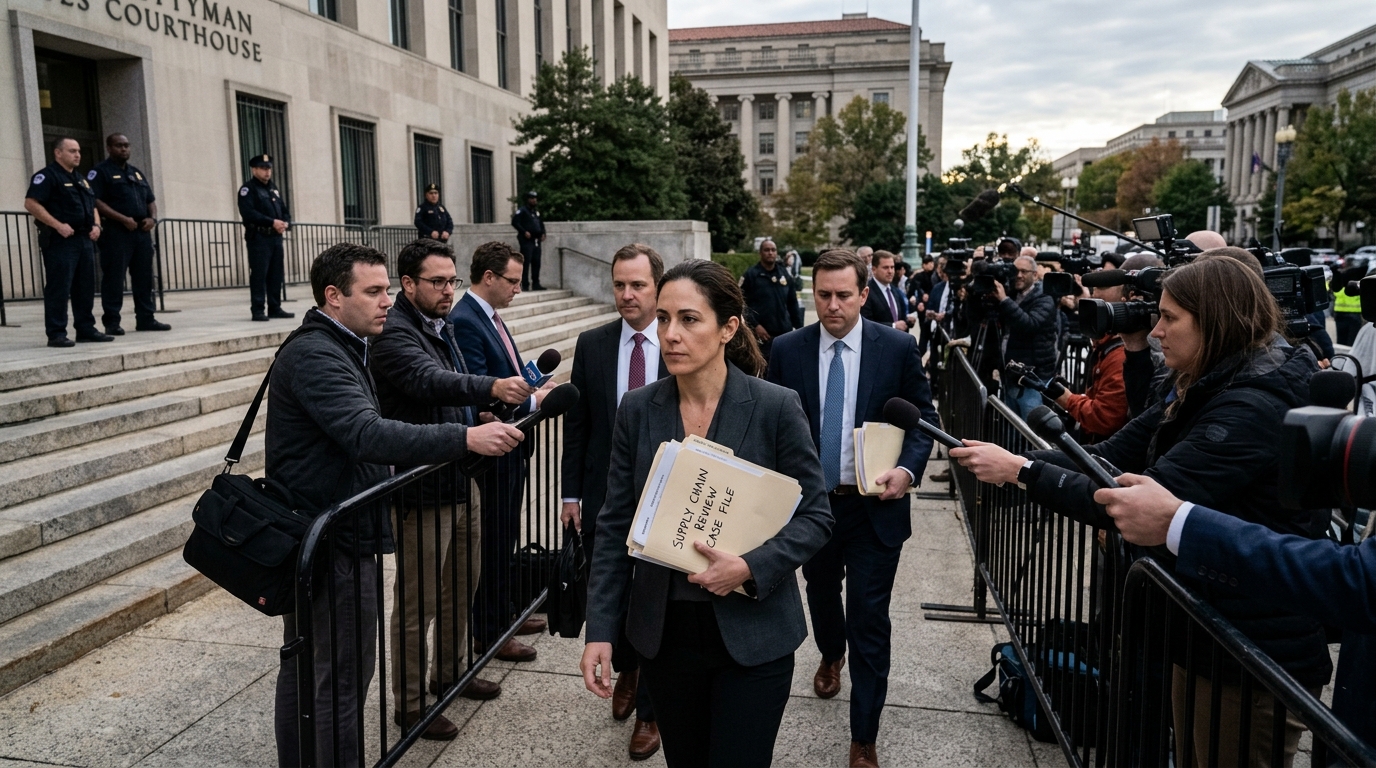
A U.S. appeals court has upheld the Pentagon’s designation of Anthropic as a supply chain risk, according to CNBC. The ruling adds to a wider market theme: government scrutiny of technology-linked supply chains remains a live issue for companies operating in sensitive sectors, and legal challenges may not easily reverse those determinations.
For investors, the significance extends beyond a single case. Court backing for a national-security-related designation can reinforce the idea that regulatory and defense authorities retain broad influence over procurement access, vendor eligibility and business relationships tied to strategic technology systems.
Why the ruling matters for markets
CNBC reported that the appeals court upheld the Pentagon’s position, preserving the supply chain risk label. While the headline does not detail the court’s full reasoning, the result alone is meaningful for market participants evaluating policy risk around companies exposed to government customers, critical infrastructure or advanced technology ecosystems.
In stock-market terms, supply chain and national security rulings can matter through several channels:
- Revenue access: Companies facing official risk designations may find it harder to win or maintain government-related business.
- Counterparty caution: Suppliers, partners and customers can reassess relationships when a court affirms a security-related determination.
- Valuation pressure: Even without immediate financial figures, sustained regulatory uncertainty can weigh on sentiment toward affected firms or adjacent peers.
A broader signal on U.S. tech oversight
The decision also fits a broader pattern in which U.S. authorities have taken an increasingly assertive approach to supply chain integrity, especially where national security concerns are involved. Markets have become more attentive to that theme because it reaches beyond defense contracting into semiconductors, communications infrastructure, software, cloud systems and AI-adjacent technologies.
When an appeals court upholds an agency’s designation, it can be interpreted as a sign that judicial review may not quickly dilute the government’s stance. That does not resolve every future dispute, but it does underscore that legal appeals are only one part of the risk equation for technology companies.
It also raises the bar for firms hoping to separate commercial narratives from geopolitical and security concerns. In sectors where procurement standards and trust are central, regulatory labels can become durable market factors in their own right.
What investors may look for next
With the ruling in place, market attention may shift to whether there are downstream operational consequences. Investors typically watch for signs such as procurement restrictions, contract implications, revised company disclosures or changes in how peers discuss compliance and security review processes.
Even without immediate numerical guidance, a court decision of this kind can influence how investors price policy-sensitive technology exposure. Companies with complex international supply chains or links to regulated end-markets may face more investor questions about resilience, disclosure and compliance strategy.
The ruling may also feed into a broader reassessment of how much legal and policy risk deserves to be reflected in technology valuations. In recent years, markets have often focused on growth, product cycles and AI opportunity. But decisions like this are reminders that administrative and judicial developments can also affect the investability of a business.
Not just a one-company story
Although the immediate headline concerns Anthropic, the market lesson is wider. A court-backed Pentagon designation highlights that in strategic industries, legal structure and national security policy can shape competitive outcomes alongside innovation and demand.
Neutral outlook: According to CNBC, the appeals court ruling keeps supply chain security firmly in focus and suggests investors will continue to monitor regulatory exposure as a core factor for sensitive technology names.
MarketPro reports are AI-assisted analyses of publicly reported market news. Not investment advice.