China AI Push Adds Pressure to U.S. Tech Strategy
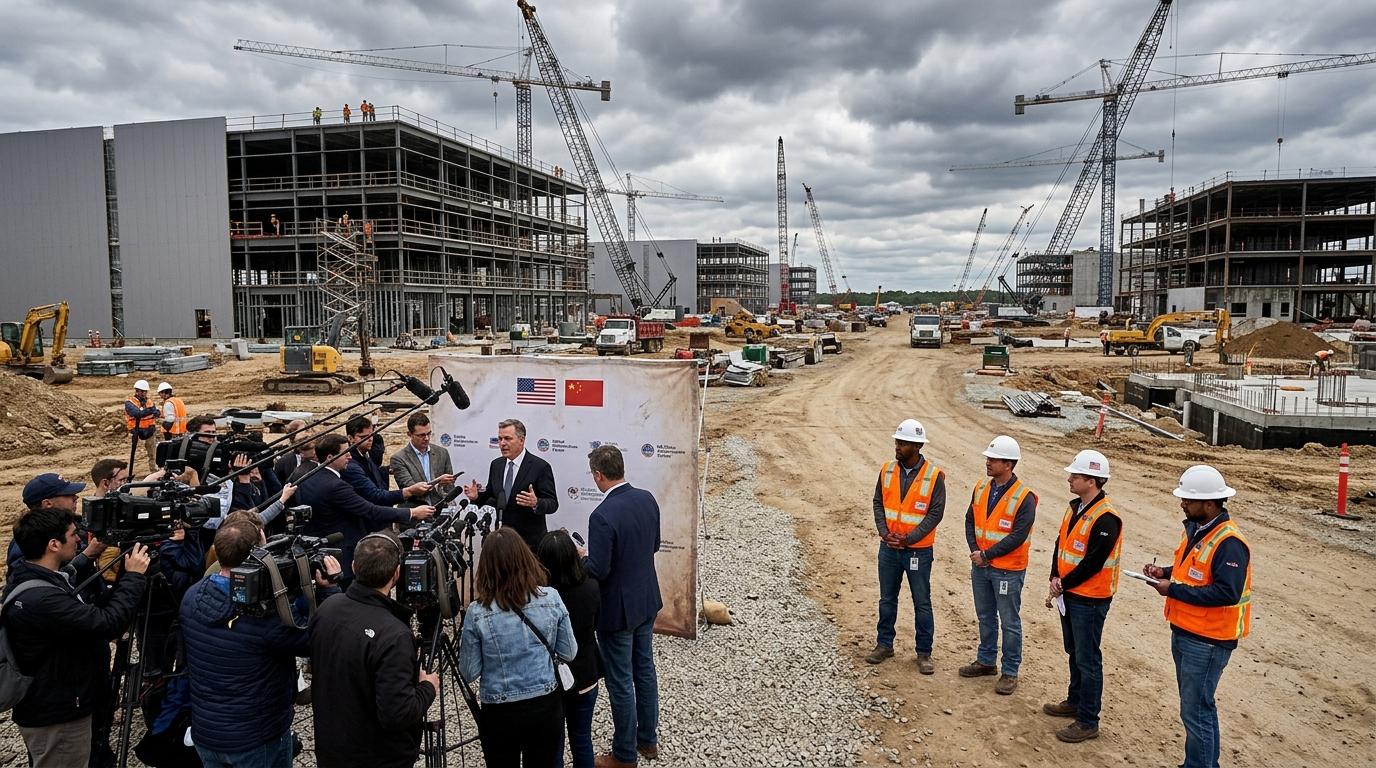
China’s artificial-intelligence expansion is emerging as a clearer market theme after multiple reports highlighted both the rise of Chinese AI models and Beijing’s interest in the U.S. data-center buildout. CNBC reported that Chinese AI models are gaining global popularity and that Washington is concerned, while also reporting that China wants in on the U.S. AI data-center boom. MarketWatch separately framed the issue as China playing a different game on AI.
Taken together, those reports point to a more important development than any single product launch: AI competition is increasingly about infrastructure, policy access and geopolitical leverage, not just model performance. That has direct implications for technology stocks, data-center operators, semiconductor supply chains and companies exposed to AI capital spending.
Why this is bigger than an AI product story
For markets, the combined reporting matters because it connects two layers of the AI race. The first is software reach: Chinese models are reportedly winning users globally. The second is physical capacity: data centers, power access and hardware deployment. When those two trends intersect, investors begin to assess competitive pressure across a much broader set of listed companies.
According to CNBC, Washington is worried about the overseas rise of Chinese AI models. That concern suggests policymakers may increasingly view AI adoption as a strategic influence issue, not merely a commercial one. MarketWatch reinforced that framing by arguing that China is operating with a different approach to AI competition.
The additional CNBC report that China wants exposure to the U.S. AI data-center boom raises another market question: how open will the United States remain to foreign participation in AI infrastructure tied to national-security-sensitive technology?
Market transmission channels are becoming clearer
This story matters because AI investing has already broadened well beyond chipmakers. Any policy or geopolitical shift affecting data-center financing, access or regulation can ripple across:
- Cloud and hyperscale companies building AI capacity.
- Semiconductor and networking suppliers tied to data-center expansion.
- Utilities and power-equipment firms benefiting from rising electricity demand.
- Real-estate and infrastructure groups involved in server campus development.
If Washington becomes more restrictive toward Chinese participation in U.S. AI infrastructure, some companies could face changes in capital access, partnership structures or compliance expectations. If Chinese AI models continue gaining traction internationally, meanwhile, investors may reassess the durability of U.S. incumbents’ pricing power and market share assumptions.
Policy risk is now part of the AI valuation story
The recent AI boom in equities has often been framed around demand for chips and computing power. But these reports show that regulation and national strategy are becoming harder to separate from the growth narrative.
That does not automatically mean near-term commercial disruption for major U.S. technology firms. The headlines provided do not establish new restrictions, new sanctions or a concrete policy package. However, they do indicate that policymakers are paying closer attention to who builds AI systems, who funds the infrastructure and who captures global users.
For stock markets, that can matter even before any formal action is taken. Heightened scrutiny alone can affect sentiment in sectors where valuations already assume long AI growth runways and relatively smooth execution.
What investors may watch next
Based on the reports from CNBC and MarketWatch, the next phase of this story is likely to revolve around policy clarity. Key watchpoints include:
- Whether Washington signals tighter oversight of foreign involvement in AI infrastructure.
- How quickly Chinese AI models expand globally in enterprise and consumer markets.
- Whether U.S. tech companies adjust capital-spending plans around data-center buildouts.
- How supply-chain firms position around competing AI ecosystems.
The broader takeaway is that AI’s market story is no longer only about innovation speed. It is increasingly about strategic control over compute, data and deployment pathways. According to CNBC and MarketWatch, China’s AI push is now forcing those questions more directly into the open.
Neutral outlook
In the near term, investor attention is likely to stay on infrastructure spending and policy signals. If competitive gains by Chinese AI firms continue, and if U.S. scrutiny hardens, AI-related stocks could face a more geopolitically complex backdrop.
MarketPro reports are AI-assisted analyses of publicly reported market news. Not investment advice.