EU Gas Warning Revives Energy Price Risk for Europe
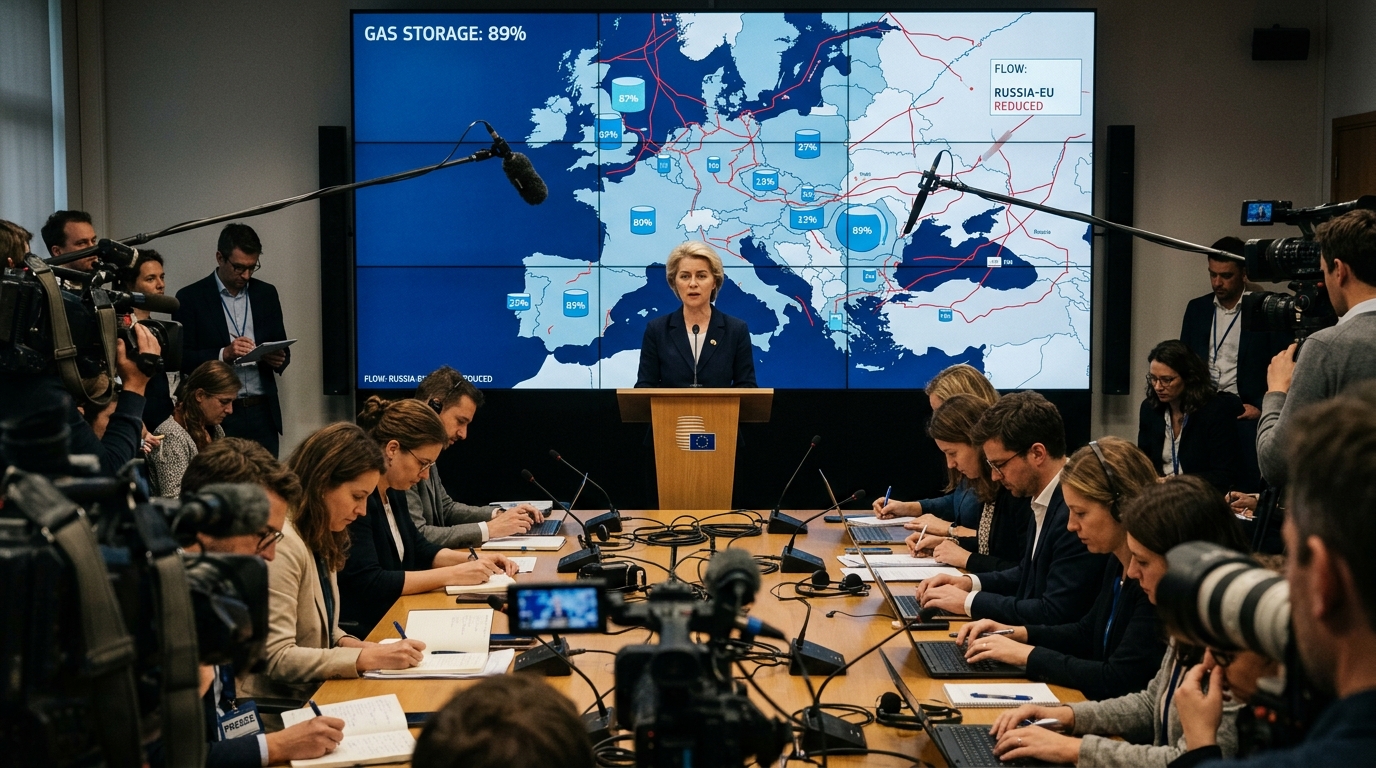
Europe’s energy market moved back into focus after Investing.com, citing Bloomberg, reported that the European Union has warned of a possible energy price crisis and is urging cuts in gas demand. The development matters for commodities investors and for the broader macro outlook because Europe’s gas market has repeatedly shown that policy guidance can quickly spill into power prices, industrial costs and inflation expectations.
The headline is notable less for immediate numerical detail and more for the signal it sends: European officials appear concerned enough about supply-demand balance and price vulnerability to publicly push conservation again. That alone can influence market positioning in natural gas, utilities and energy-intensive industries.
Why the EU warning matters for markets
Gas remains one of Europe’s most politically sensitive and economically important commodities. When officials warn about price pressure, traders typically look at several transmission channels: storage adequacy, import dependence, weather risk, industrial demand and competition for liquefied natural gas cargoes.
According to the Investing.com report, the EU message is centered on reducing demand. That is significant because demand cuts were a major part of Europe’s earlier response to energy shocks. Even without fresh supply disruption headlines attached, a renewed call for restraint suggests policymakers still see the market as exposed.
For financial markets, the consequences can stretch well beyond gas futures. Higher or more volatile gas prices can affect:
- European power costs, since gas still influences electricity pricing in many markets.
- Industrial margins, especially in chemicals, metals and manufacturing.
- Inflation expectations, if household and business energy bills rise again.
- Currency sentiment, as higher imported energy costs can weigh on regional growth expectations.
Policy language itself can move commodities
One lesson from Europe’s earlier energy shocks is that official language can matter almost as much as hard supply data in the short term. A warning from Brussels may encourage companies and governments to reassess purchasing plans, hedging strategies and storage targets.
That does not automatically mean a sustained price surge is coming. But it does raise the odds that traders will pay closer attention to inventory trends, weather forecasts and any sign of tighter global LNG availability. If those factors worsen at the same time, policy warnings can amplify market moves.
It is also important that the EU is emphasizing demand reduction rather than announcing a specific emergency intervention in the headline provided. That distinction suggests officials may still be trying to manage risk before conditions deteriorate further, rather than responding to a full-blown crisis already under way.
What businesses and investors may watch next
The market focus now shifts to whether the warning is followed by stronger policy coordination or remains largely precautionary. Energy users and investors are likely to monitor several questions:
- Will member states adopt or expand conservation measures?
- Are gas inventories tracking comfortably against seasonal demand?
- Do LNG imports remain steady, or does global competition intensify?
- Does energy-price pressure begin feeding into broader inflation data?
The broader macro significance is clear. Energy was one of the main drivers of Europe’s earlier inflation shock, and any renewed price stress could complicate the region’s growth and policy outlook. That is why even a relatively brief warning from EU officials can resonate across commodities, rates and equities.
For now, the available reporting does not establish the scale of any immediate supply shortfall, and it would be premature to assume a repeat of past extremes. Still, according to the Investing.com report citing Bloomberg, the EU’s warning is enough to put Europe’s gas balance and energy-price vulnerability back on the market agenda.
Neutral outlook
Near term, the key issue is whether the EU’s caution proves preventive or prescient. If supply holds and demand stays contained, market stress may ease. If tighter balances emerge, Europe’s gas market could again become a wider macro driver.
MarketPro reports are AI-assisted analyses of publicly reported market news. Not investment advice.