Meta’s Wonder launch revives race to monetize consumer AI
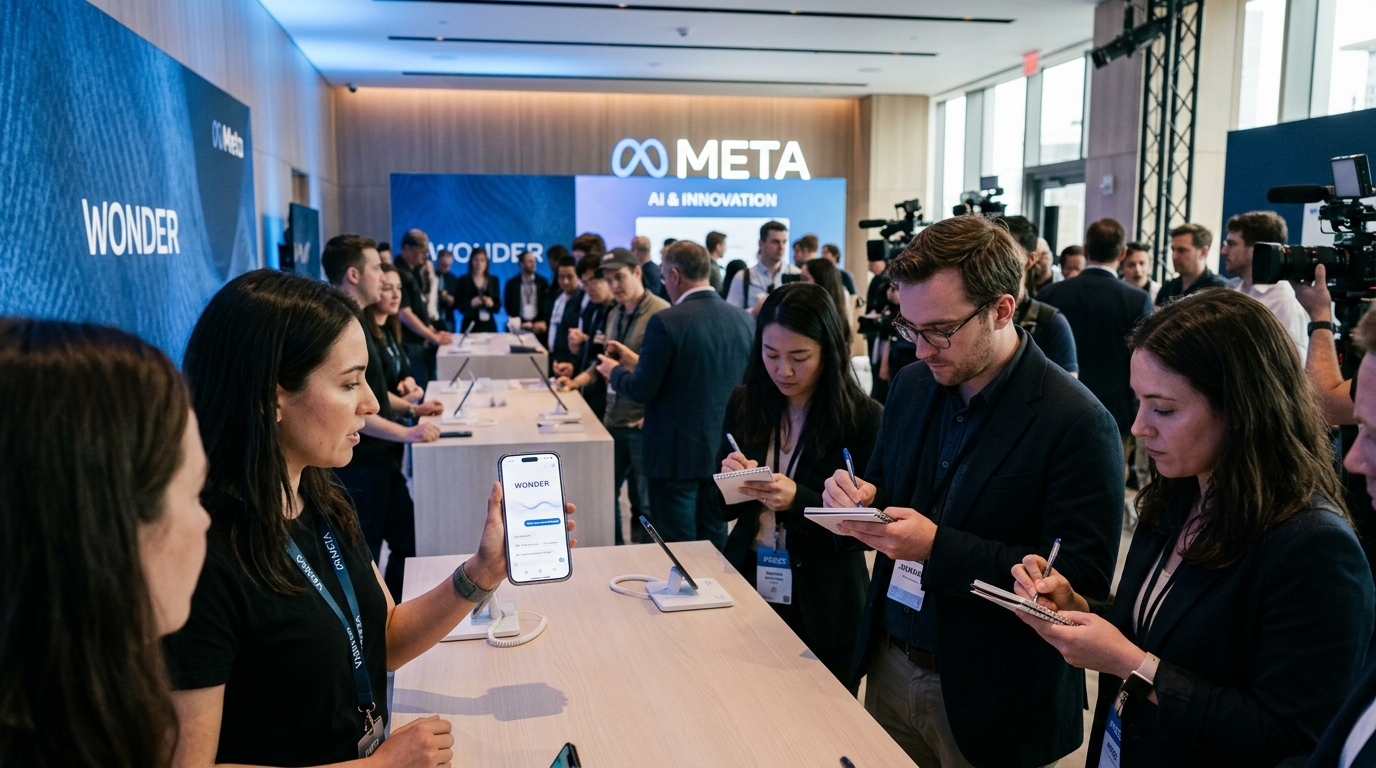
Meta has launched a new family of Wonder artificial-intelligence models, reopening a central market debate: how quickly can big consumer internet platforms turn AI products into revenue that justifies heavy investment?
According to CNBC and MarketWatch reports, Meta introduced the Wonder lineup as its latest push to test whether users will pay for more advanced AI tools. The development matters beyond product strategy because investor sentiment around large-cap technology has increasingly hinged on whether AI spending can be monetized in ways that are visible in earnings rather than only in engagement metrics.
Why this launch matters for markets
For equity markets, the significance of the Wonder rollout is not simply that Meta has unveiled another AI model. It is that the company is signaling confidence that consumer-facing AI may support paid offerings, premium tiers or other commercial services. That would place Meta more directly in competition with other large technology companies pursuing subscription, enterprise and platform-based AI revenue streams.
MarketWatch framed the launch as putting Meta back on the AI leaderboard, while CNBC emphasized the company’s willingness to test consumer payment behavior. Together, those reports point to the same core issue for investors: AI leadership is no longer judged only by model quality or benchmark performance, but by the ability to convert technical progress into repeatable business results.
That distinction has become more important as technology companies keep committing large sums to infrastructure, chips and software development. Markets have so far rewarded companies that present a credible AI narrative, but investor tolerance for open-ended spending may narrow if revenue trails expectations.
The monetization question is becoming sharper
Meta’s position in this debate is unusual. Unlike pure software vendors, it has a global consumer platform footprint and deep advertising expertise. That gives it several possible paths to monetization, including paid AI features, creator tools, business messaging enhancements and ad-performance improvements. But the same breadth also raises the bar: investors may expect monetization at scale rather than niche success.
CNBC’s focus on user willingness to pay underscores an important shift in AI markets. For much of the past cycle, investors treated AI adoption as a broad strategic positive. Now they are asking more specific questions:
- Will consumers pay directly for advanced AI features?
- Can AI improve ad targeting or engagement enough to lift existing revenue lines?
- How durable are the economics once compute and model-training costs are considered?
Meta’s launch does not answer all of those questions immediately, but it does move the discussion from theory toward market testing.
Implications for big tech valuations
The Wonder release also matters because it lands in a market environment where investors continue to differentiate between AI enablers and AI adopters. Semiconductor and infrastructure firms have often led the narrative because their revenue link to AI spending can appear more direct. For consumer platform companies, the challenge is proving that AI can support margins and sales growth rather than simply raising capital expenditure.
If Meta shows evidence that users will pay, or that AI features materially strengthen engagement and advertising performance, the market could interpret that as a positive read-through for parts of the broader consumer internet and software space. If adoption is strong but willingness to pay is weak, investors may instead conclude that value is accruing unevenly across the AI stack.
MarketWatch’s characterization of Meta regaining AI momentum is important in that context. The AI trade has increasingly been shaped by relative positioning among mega-cap firms. Product launches can therefore influence not just one company’s outlook, but expectations for sector leadership, pricing power and competitive intensity.
What investors may watch next
After the launch, the market is likely to focus less on the announcement itself and more on follow-through indicators. These may include management commentary on user adoption, evidence of premium conversion, and any signs that AI products are improving broader platform economics.
Investors will also be attentive to whether Meta presents Wonder as a standalone revenue opportunity or as part of a wider ecosystem strategy. The latter could still matter financially, especially if AI helps deepen user retention or boost advertiser returns, but it may take longer to show up cleanly in reported results.
According to CNBC and MarketWatch reports, the message from Meta is clear enough: the company wants to be seen not only as an AI builder, but as a company willing to test commercial demand in public. In the current market, that may be as important as the technical launch itself.
Neutral outlook: The Wonder debut strengthens Meta’s AI positioning, but the stock-market impact will likely depend on whether management can show measurable monetization rather than only product momentum.
MarketPro reports are AI-assisted analyses of publicly reported market news. Not investment advice.